The 15 best exercises to work your abs
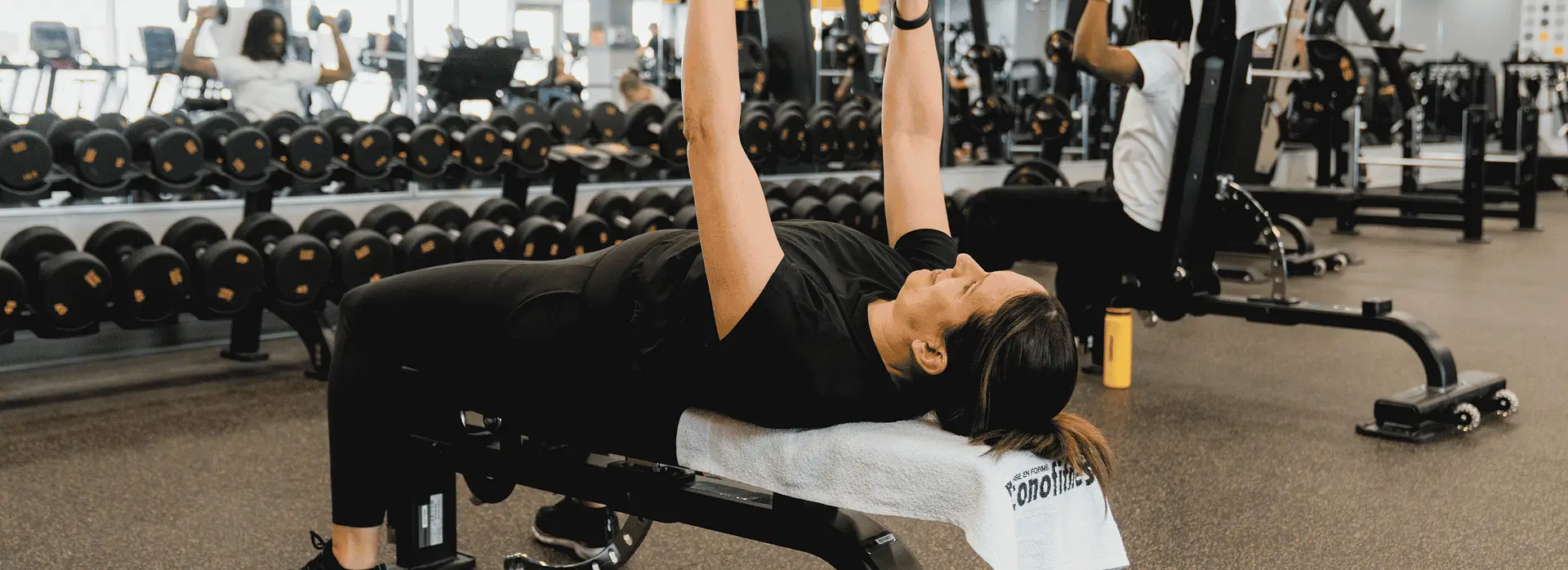
The dumbbell bench press is an excellent exercise for working the upper body efficiently and at your own pace. Discover our simple tips and accessible variations to safely engage your muscles during your next workout!
Muscle recruitment is the ability of your nervous system to activate more or less muscle fibers to generate movement. One of the biggest strengths of the dumbbell bench press is that it allows for a greater range of motion. By lowering the dumbbells to either side of your chest, you get a deeper stretch of the pectoralis major, which helps better recruit muscle fibers. This freedom also allows you to adjust the angle of your wrists and elbows during the movement—an excellent way to maximize the work on your pecs while protecting each joint.
Integrating this movement into your weight training routine forces each arm to push completely independently. Dumbbell exercises, and this one in particular, are ideal for developing chest muscle mass symmetrically and identifying a weaker side that might tend to let the other do all the work. By stabilizing each repetition yourself, you build balance, which helps reduce the risk of injury over the long term.
Whether you are taking your first steps or have been training for a long time, this exercise adapts perfectly to your needs. At Éconofitness Gyms, you will find a wide variety of weights so you can select the exact load that suits your current level. It is a simple movement to master, allowing you to progress at your own pace, safely and without any pressure.
| Exercise Name | What it works | Difficulty Level |
| 1. Classic bench press | Pectoralis major, front of the shoulder (anterior deltoid), and triceps | Beginner / Intermediate |
| 2. Incline dumbbell press | Upper chest (clavicular head) and stabilizing muscles | Intermediate |
| 3. Decline dumbbell press | Lower chest and triceps (reduced shoulder pressure) | Intermediate |
| 4. Standing dumbbell calf raise | Gastrocnemius muscles (calves) and ankle stability | Beginner |
| 5. Seated dumbbell calf raise | Soleus muscle (deep muscle beneath the calf) | Beginner |
The classic flat bench press is the foundational exercise for building upper body strength. This movement primarily targets the pectoralis major while engaging the anterior deltoid (front of the shoulder) and the triceps to complete the push.
This variation involves performing the bench press on an inclined bench (around 30 to 45 degrees). It alters the angle of the push to focus on the clavicular portion of the pectorals and requires extra effort from the shoulders and stabilizing muscles.
Using dumbbells on a slightly declined bench allows you to target the lower part of the chest. This position reduces stress on the shoulders while effectively recruiting the muscle fibers of the lower pectorals and triceps.
Working on your calves is a great way to complete your training. The proposed exercise allows to strengthen the lower legs in a simple and accessible way. It works the gastrocnemius muscles and greatly improves the stability of your ankle for other daily activities.
This variation, done on the floor or a bench, targets the soleus muscle specifically, located underneath the gastrocnemius. Working the calves while seated isolates the lower leg without engaging the rest of the body.
To integrate these movements into your routine and build a strong body at your own pace, choose the ideal option among our Weekend, Econo, Platinum, and Extra memberships. Come train without any intimidation in our local gyms across Quebec and enjoy modern facilities to achieve your fitness goals!
The barbell allows you to work with heavy loads, but it limits your movement path. Dumbbells offer greater freedom of flexion and allow for a neutral grip (palms facing each other), which helps protect the shoulders and reduce the risk of injury.
Choose a light weight that allows you to master the technique before aiming for heavier loads. Remember to inhale as you lower the weights and ensure your feet stay firmly planted on the floor to maintain a solid, safe base.
You should feel a contraction in the center of your chest as you push, without letting your shoulders round forward. Keep your head and shoulder blades pressed firmly against the bench throughout the exercise to isolate the work on your pectorals.
The 15 best exercises to work your abs
8 easy cardio exercises to do at the gym
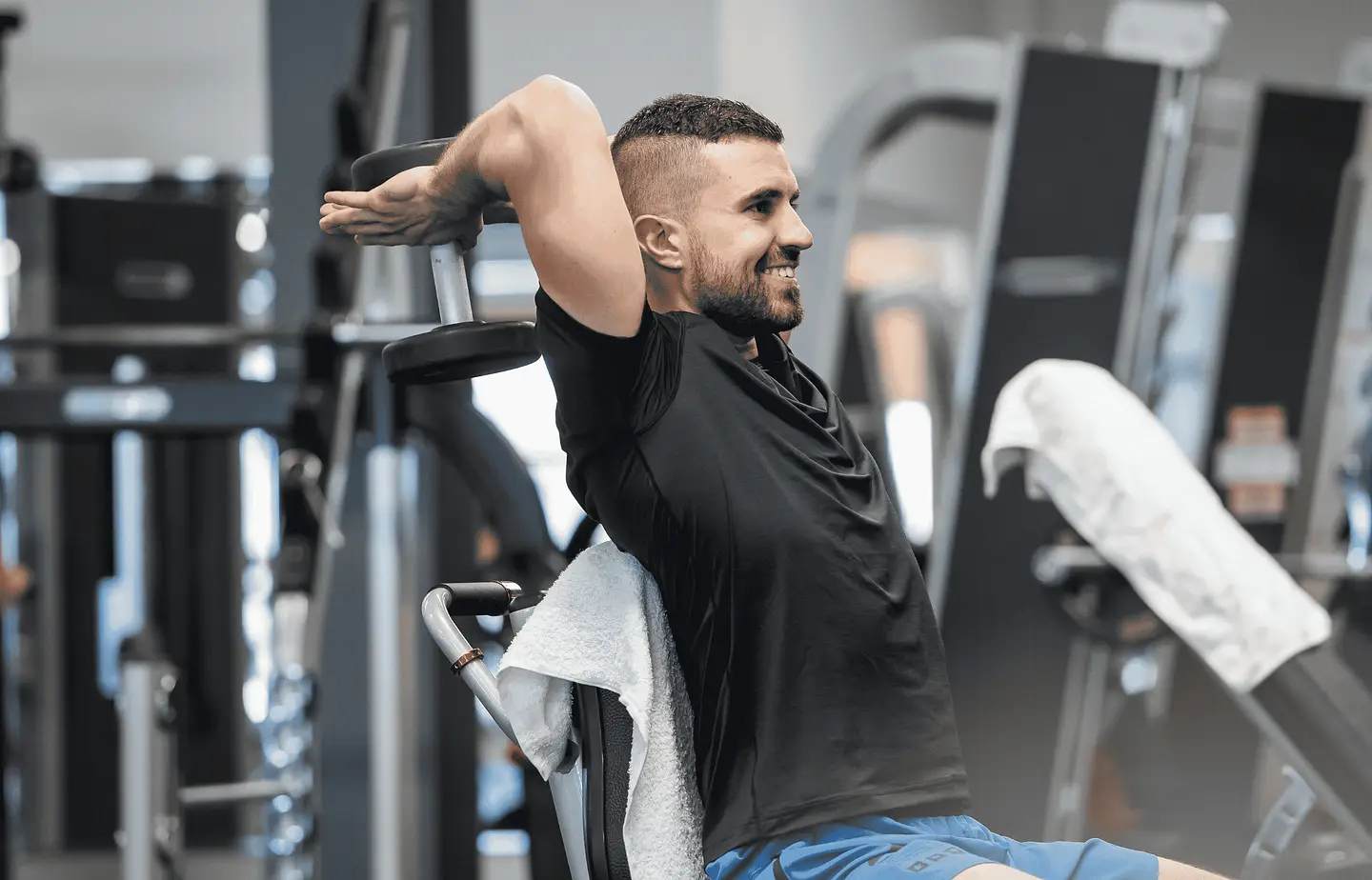
10 best exercises with dumbbells
What we offer
Starting at
$129.75
per year
More than
75 gyms
in Quebec
Most gyms
open
24/7
Today is the day. Join now!
Éconofitness is THE gym you need to work out more and feel great! Over 75 gyms in Quebec, most of which are open 24/7, with memberships starting at $129.75/year, enough quality equipment for everyone and a friendly atmosphere. Work out at your own pace starting today!